About This Course
Master practical financial statement preparation using Microsoft Excel. Learn how financial statements are prepared in the real working environment, from bookkeeping to complete financial reporting, using practical business scenarios and internationally accepted accounting standards
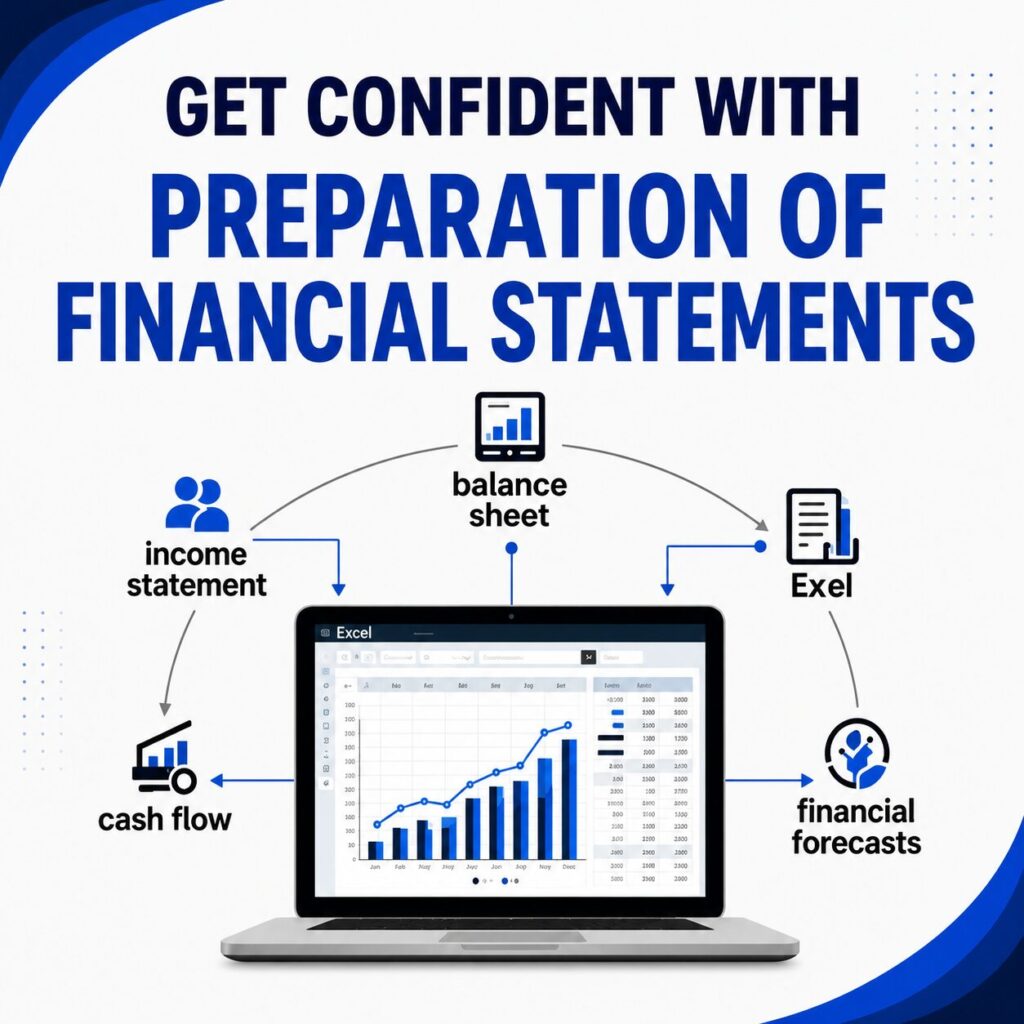
Join The Upcoming intake of September 2026
Starting on 1st/Sept/2026
WHY CHOOSE THIS COURSE?
This practical training is designed to equip participants with the skills required to prepare complete financial statements from accounting records using Microsoft Excel. The course bridges the gap between accounting theory and workplace practice through hands-on exercises, projects, and real business case studies. At times entities are not keeping proper books of accounts and accountants are required to do financial reporting from the incomplete records. In this training, all complex scenarios are covered
100% Practical Training
Real Business Scenarios
Excel-Based Learning
Career Support
Insights of this Training
Financial statements are the foundation of every successful business and are essential for measuring financial performance, assessing business health, and supporting informed decision-making. Whether you are an accountant, finance professional, business owner, student, or aspiring CPA, the ability to prepare and interpret financial statements is one of the most valuable professional skills in today's workplace. This practical training is designed to take you through the complete financial reporting process using Microsoft Excel, enabling you to prepare professional financial statements from the ground up. Rather than relying on accounting software to generate reports automatically, you will learn the logic behind every figure and how each financial statement is connected, giving you the confidence to prepare accurate reports in any working environment. Throughout the training, participants will build financial statements step by step using real business scenarios and practical exercises. You will learn how accounting transactions flow through the accounting cycle—from source documents and journals to ledgers, trial balances, adjustments, and finally into complete financial statements. By the end of the course, you will have developed a fully linked Excel workbook capable of automatically generating financial statements from accounting data.
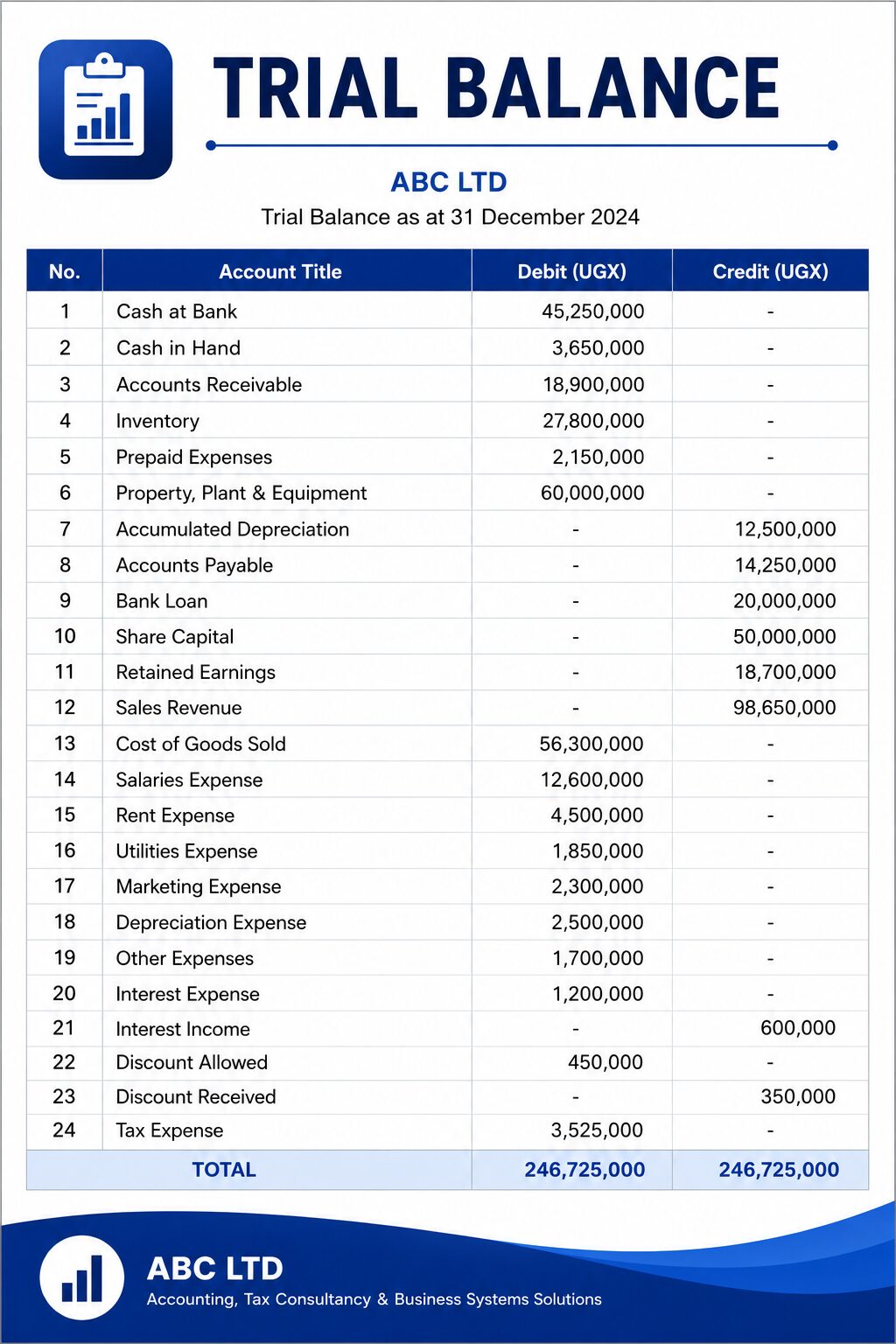
Trial Balance
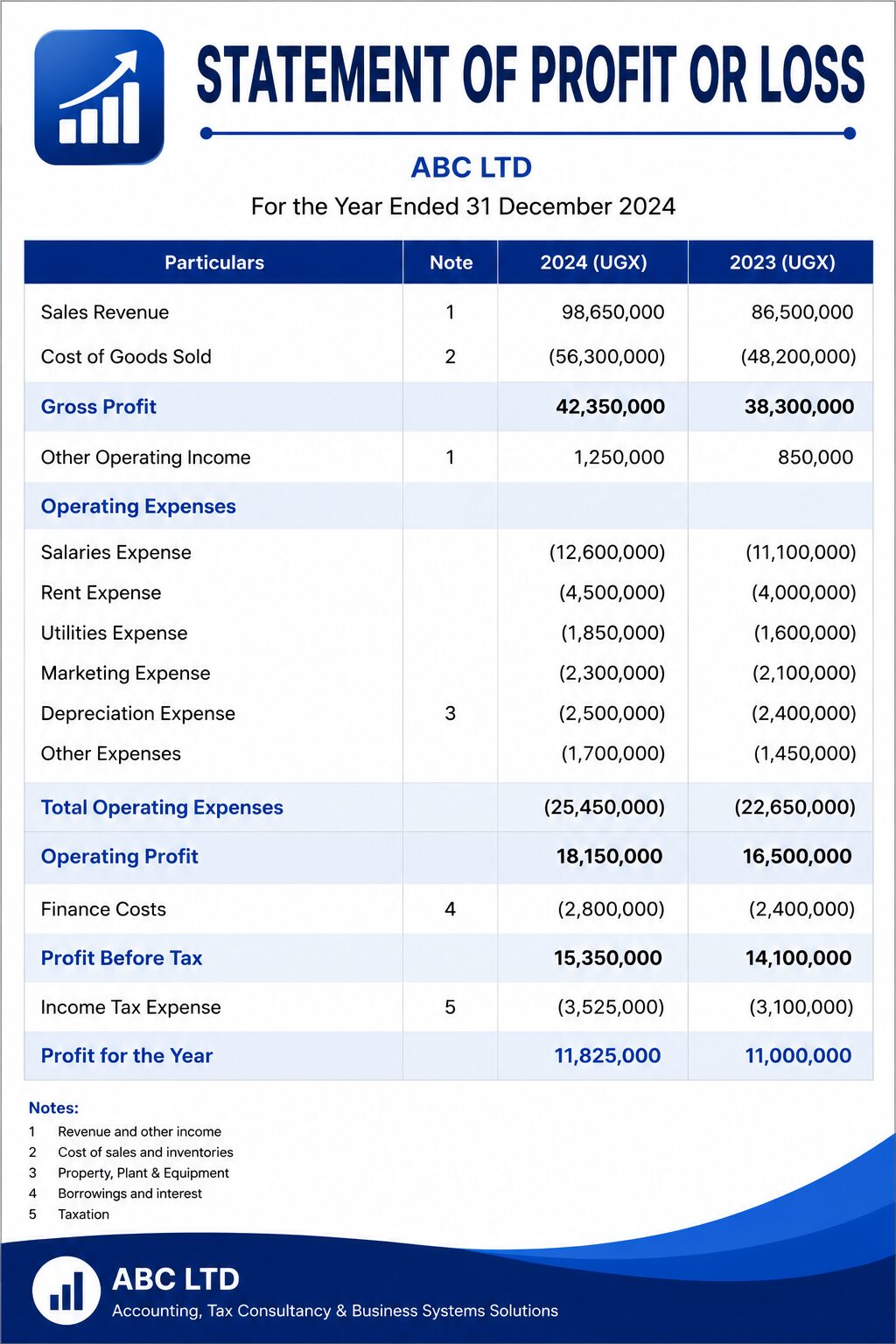
Statement of Profit or Loss
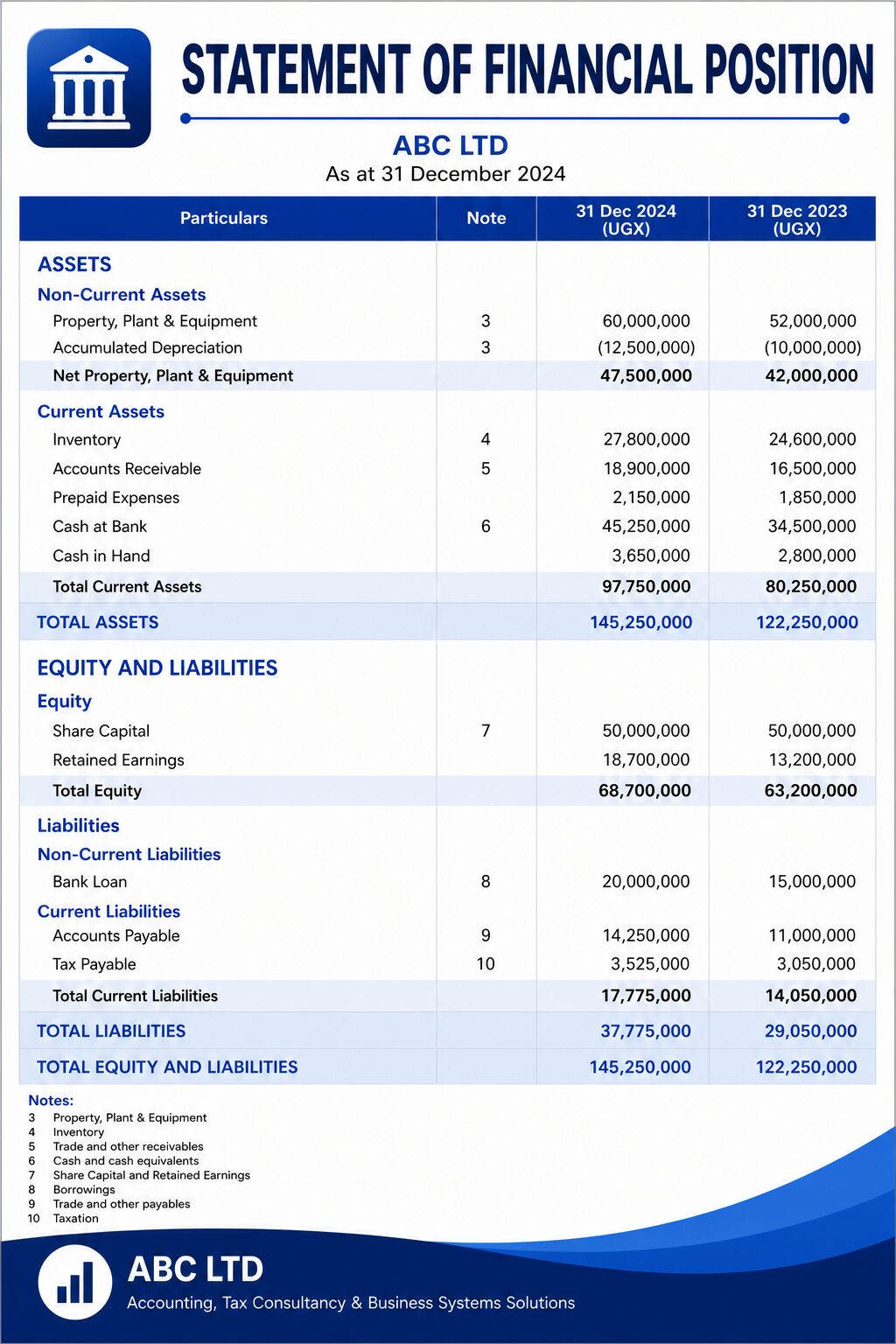
Statement of Financial Position
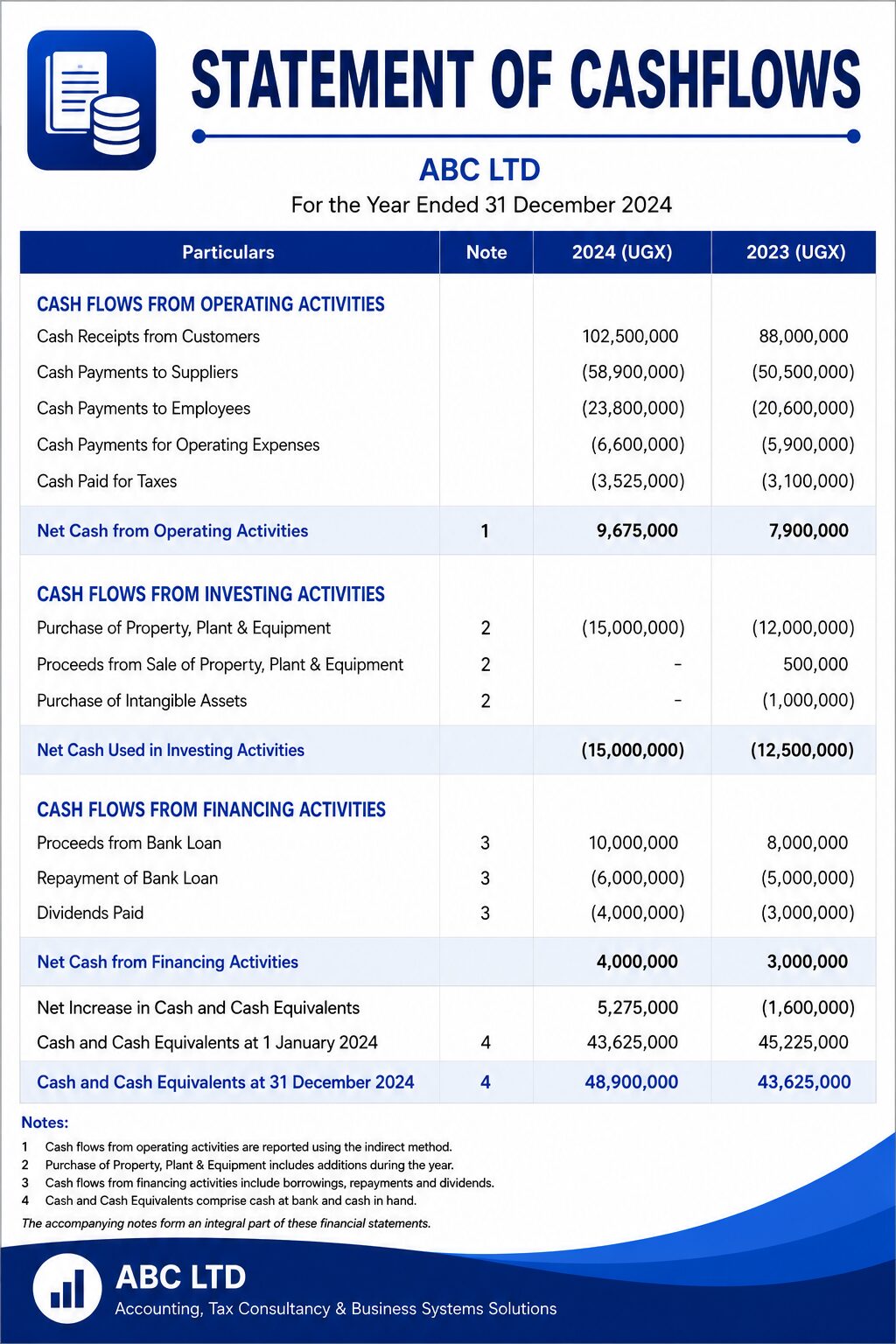
Statement of Cashflows
What you will learn
1. Bookkeeping Systems for Businesses and Organizations
- Introduction to bookkeeping
- Source documents
- Books of original entry
- Recording business transactions
2. Application of the Accounting Cycle
- Journal entries
- Posting to ledgers
- Trial balance preparation
- Adjusting entries
- Closing entries
3. Preparation of Books of Accounts in Excel
- General Journal
- General Ledger
- Cash Book
- Petty Cash Book
- Receivables Ledger
- Payables Ledger
4. Linking Financial Statements in Excel
Learn how every financial statement is automatically connected using Excel formulas and dynamic references.
5. Preparation of Financial Statements in Excel
Prepare complete financial statements including:
- Trial Balance
- Statement of Profit or Loss
- Statement of Financial Position (Balance Sheet)
- Statement of Cash Flows
- Statement of Changes in Equity
- Notes to the Financial Statements
6. Handling Incomplete Records and Messy Books
- Correction of accounting errors
- Missing transactions
- Bank reconciliation
- Data clean-up techniques
7. Financial Statement Preparation from Incomplete Records
Learn practical approaches used by accountants when complete accounting records are unavailable.
8. Analysis of Bank Statements
- Cash movement analysis
- Identifying missing transactions
- Preparing reconciliation schedules
9. Financial Statements from Accounting Software
Prepare financial statements using reports generated from accounting software such as:
- QuickBooks
- Tally Prime
- Odoo ERP
- Zoho Books
- Nimora ERP
10. Financial Reporting under IAS & IFRS
Understand how International Accounting Standards (IAS) and International Financial Reporting Standards (IFRS) guide financial statement preparation.
By the End of This Training, Participants Will Be Able To:
- Design and Maintain an Effective Bookkeeping System
- Set up practical bookkeeping systems for SMEs, NGOs and other organizations.
- Organize accounting records that support accurate financial reporting.
- Apply the Complete Accounting Cycle
Participants will confidently:
- Analyse business transactions
- Record journal entries
- Post to ledgers
- Prepare a Trial Balance
- Make year-end adjustments
- Prepare final accounts
- Prepare Books of Accounts in Microsoft Excel
Participants will build professional Excel-based accounting records including:
- General Journal
- General Ledger
- Trial Balance
- Supporting schedules
- Prepare a Complete Set of IFRS-Based Financial Statements
Participants will independently prepare:
- Statement of Profit or Loss
- Statement of Financial Position
- Statement of Cash Flows
- Statement of Changes in Equity
- Notes to the Financial Statements
using Microsoft Excel and aligned with IAS/IFRS principles.
- Link Financial Statements Professionally
Participants will understand how:
- Profit flows into Equity
- Cash flows reconcile with Cash & Bank
- Depreciation affects the Statement of Financial Position and Profit or Loss
- Every financial statement connects with the others
- Correct Accounting Errors and Adjust Financial Records
Participants will confidently:
- Detect accounting errors
- Correct mistakes
- Pass adjusting journal entries
- Prepare adjusted Trial Balances
- Produce corrected financial statements
- Prepare Financial Statements from Incomplete Records
Participants will learn how to reconstruct accounting information from:
- Bank statements
- Cash books
- Invoices
- Receipts
- Available supporting documents
- Analyse Bank Statements
Participants will be able to:
- Interpret bank transactions
- Trace missing entries
- Identify accounting implications
- Use bank information to support financial reporting
- Generate Financial Statements from Accounting Software
Participants will learn how to:
- Extract reports from accounting software
- Review accuracy
- Convert exported data into professionally presented financial statements
- Apply IAS & IFRS in Practical Financial Reporting
Participants will gain practical exposure to:
- Presentation requirements
- Disclosure requirements
- Comparative reporting
- Financial statement structure
- Professional reporting practices
- Prepare Professional Working Papers
Participants will prepare supporting schedules for:
- Property, Plant & Equipment
- Depreciation
- Accruals
- Prepayments
- Receivables
- Payables
- Inventory
- Present Financial Reports Professionally
Participants will produce financial statements suitable for:
- Management
- External Users
- Prepare Accounting Records for Audit Readiness
- Participants will be able to organize, reconcile and maintain accounting records and supporting documents in a manner that facilitates efficient internal and external audit processes.
- Develop Professional Workplace Competence
- Work confidently as an Accounts Assistant, Accounts Officer or Finance Officer etc
- Prepare month-end and year-end financial reports.
- Meet employer expectations in a finance department.
- Apply professional accounting practices in day-to-day operations.
PROFESSIONAL SKILLS yOU WILL DEVELOP
- Microsoft Excel proficiency
- Analytical thinking
- Attention to detail
- Problem-solving
- Financial reporting
- Professional documentation
- Data interpretation
- Report presentation
WHO SHOULD ATTEND?
Accountants
Strengthen your financial reporting skills by learning how to prepare accurate financial statements in Excel, improve report quality, and confidently meet workplace and regulatory reporting requirements.
CPA Students
Bridge the gap between academic knowledge and practical application by preparing financial statements using real-world business scenarios and Microsoft Excel.
Auditors
Develop a deeper understanding of how financial statements are prepared, enabling you to perform audits more effectively, identify errors, and evaluate financial information with confidence.
Graduates Seeking Practical Accounting Skills
Enhance your employability by acquiring practical financial reporting skills that employers expect but are often not covered in depth during university studies.
Finance Officers
Learn how to prepare professional financial reports, support management decision-making, improve budgeting, and produce accurate financial statements for stakeholders.
Tax Practioners
Understand how financial statements form the basis for tax computations, compliance, and tax planning, enabling you to prepare more accurate tax returns and advisory reports.
ACCA Students
Complement your ACCA studies with practical Excel-based financial statement preparation, making it easier to apply accounting principles in real workplace situations.
NGO & Project Accountants
Learn to prepare reliable financial reports that support donor accountability, grant management, audits, and compliance with financial reporting standards.
Business Owners
Gain the ability to understand and interpret your business's financial statements, enabling better financial decisions, improved profitability, and stronger business growth.
University Students
Build practical accounting skills early and graduate with hands-on experience that gives you a competitive advantage in the job market.
Accounting Software Users
Whether you use QuickBooks, Tally Prime, Odoo ERP, Zoho Books, or other accounting software, learn how to verify, analyse, and professionally present the reports generated by these systems in Microsoft Excel.
Anyone else that needs such skills
Whether you are a business owner, entrepreneur, NGO staff member, consultant, or finance enthusiast, this course equips you with practical financial reporting skills to better understand and manage financial information.
COURSE DETAILS
Duration
Flexible Training Schedule
Weekend Sessions
Weekday Sessions
Corporate Training
Online Sessions
Requirements
Passion for Accounting and Finance
Laptop/Desktop Computer
Microsoft Excel installed
Background in Accounting for example with a Diploma, Degree and professional qualification
No prior experience in financial statement preparation is required.
Training Mode
Group Online Training
Corporate In-house training
Physical Learning Space
Online Training (On-request)
Training Fee
For Group Training = 250,000shs
For other training arrangements, training fees are determined accordingly
READY TO BUILD YOUR FINANCIAL REPORTING SKILLS?
Join hundreds of professionals and students who have enhanced their accounting skills through our practical training programmes.
Become confident in preparing financial statements using Microsoft Excel.
Ready to start?
Complete our online registration form to reserve your place